
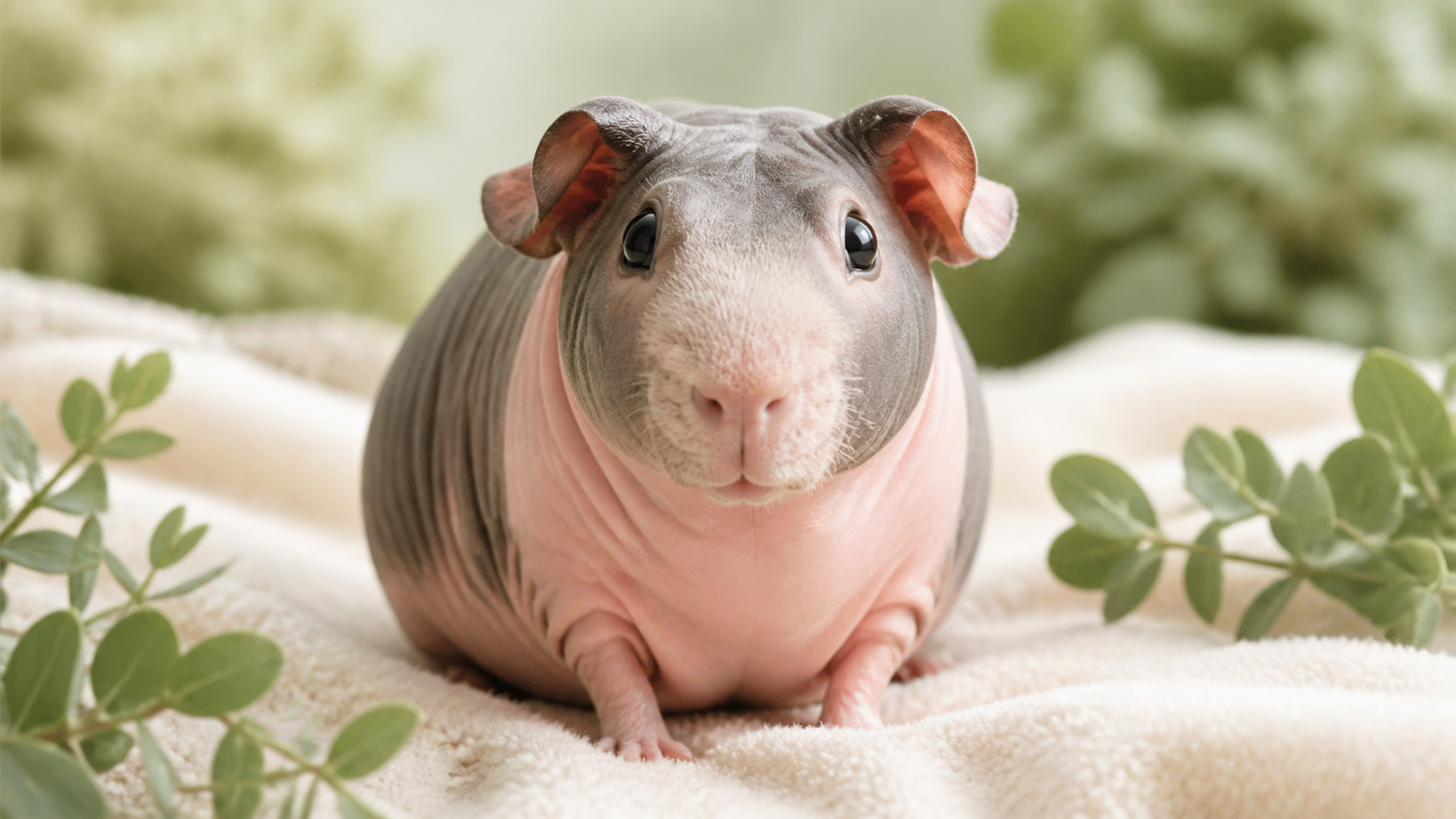
Hairless Guinea Pig
Hairless Guinea Pigs attract attention quickly, but the real story begins after the photograph. I have cared for guinea pigs for more than ten years, and the longer I live with them, the less I believe that a breed label tells us everything. It can explain coat and daily maintenance; it cannot predict every habit, friendship or dramatic reaction to nail trimming.
This guide brings together what I have learned through daily care, reading and conversations with other owners. I am not a veterinarian or breeder, so health information is for recognition and preparation, not home diagnosis. When eating, breathing, weight or behavior changes, professional help is always the safer next step.
What Does a Hairless Guinea Pig Look Like?
Most hairless guinea pigs seen as pets are Skinny pigs, which usually retain a little hair around the nose and feet. Baldwins are born with hair and lose it as they grow. Their bare skin shows folds, freckles and changing tones that would normally be hidden by fur.
One lesson I learned slowly is that the useful routine is the one a household can repeat. A perfect-looking setup that is exhausting to maintain soon stops being perfect. I prefer simple systems that make daily observation easy, because noticing a small change early is often more valuable than buying another decorative accessory.
Hairless Guinea Pig Personality and Temperament
Owners often describe them as confident, curious and wonderfully people-focused, but breed does not guarantee temperament. Some march over for attention; others need patient trust-building. Their warmth makes gentle lap time especially cosy.
Online discussions can make this subject sound more absolute than it really is. I compare advice, watch the guinea pig in front of me and ask an experienced veterinarian when health is involved. Individual age, history and medical needs can change what is sensible, so confidence should never replace curiosity.

How to Groom a Hairless Guinea Pig
There is no coat to brush, yet skin must be checked for scratches, dryness, sores and fungal or parasite problems. Soft clean fleece, careful nail care and minimal bathing are better than routine creams or oils unless a veterinarian recommends a product.
Guinea pigs are very good at turning ordinary care into a negotiation. They may object to a check, then accept the apology vegetable immediately afterward. Keeping sessions calm and brief protects trust while still allowing us to notice feet, skin, weight and behavior before a small concern becomes a larger one.
The Best Home for a Hairless Guinea Pig
Keep the home dry, softly lined and away from drafts, radiators and direct sun. Provide warm hides without making the enclosure stuffy. They often eat enthusiastically because maintaining body heat costs energy, but weight and diet still need monitoring.
The practical test is not whether something looks attractive in a photograph. It is whether the guinea pig can eat, move, rest, hide and live socially without discomfort. I return to that test whenever products, trends or confident internet opinions become confusing.
Common Hairless Guinea Pig Health Problems
Their exposed skin makes them vulnerable to scratches, chilling, overheating and sun damage. They can also develop the same dental disease, respiratory infection, gut stasis, urinary trouble and vitamin C deficiency as coated guinea pigs. A reduced appetite, breathing change or painful skin needs prompt veterinary attention.
Because guinea pigs hide pain, I never rely on one dramatic symptom. Appetite, weight, droppings, posture, breathing and normal social habits form a picture together. A change that persists or appears suddenly is worth taking seriously, even when it seems small.

Hairless Guinea Pig Diet and Daily Feeding
Unlimited grass hay should do most of the nutritional work, supported by measured guinea-pig pellets, varied fresh vegetables rich in vitamin C and clean water. Fruit is an occasional treat. Any new food should be introduced gradually, because a guinea pig digestive system dislikes surprise almost as much as an empty vegetable bowl.
One lesson I learned slowly is that the useful routine is the one a household can repeat. A perfect-looking setup that is exhausting to maintain soon stops being perfect. I prefer simple systems that make daily observation easy, because noticing a small change early is often more valuable than buying another decorative accessory.
Living With a Hairless Guinea Pig Companion
Breed does not remove the need for guinea pig company. A compatible same-sex companion or appropriately neutered pairing provides communication no person can replace. Introductions need neutral space, duplicate resources and patience. Matching personality and observing behavior matter more than matching hairstyles.
Online discussions can make this subject sound more absolute than it really is. I compare advice, watch the guinea pig in front of me and ask an experienced veterinarian when health is involved. Individual age, history and medical needs can change what is sensible, so confidence should never replace curiosity.
Is a Hairless Guinea Pig Right for a First-Time Owner?
The honest answer depends on time, budget and willingness to learn. Consider grooming, temperature, cleaning and veterinary access before appearance. Rescue staff can help match a bonded pair to a home and explain existing routines. The right animal is the one whose needs remain realistic after the first exciting week.
Guinea pigs are very good at turning ordinary care into a negotiation. They may object to a check, then accept the apology vegetable immediately afterward. Keeping sessions calm and brief protects trust while still allowing us to notice feet, skin, weight and behavior before a small concern becomes a larger one.
A Weekly Hairless Guinea Pig Care Routine
Weigh on a digital scale, feel the body, inspect feet and nails, look at eyes and nose, and check skin or coat. Note appetite and droppings every day. These small habits create a personal baseline, making it easier to recognize when something is different.
The practical test is not whether something looks attractive in a photograph. It is whether the guinea pig can eat, move, rest, hide and live socially without discomfort. I return to that test whenever products, trends or confident internet opinions become confusing.
When a Hairless Guinea Pig Needs a Veterinarian
Contact a guinea-pig-experienced veterinarian promptly for appetite loss, weight loss, breathing changes, diarrhea, bloating, blood, pain, weakness or unusual discharge. Never use leftover antibiotics or human medicine. Breed knowledge is useful, but symptoms still require an individual diagnosis.
Because guinea pigs hide pain, I never rely on one dramatic symptom. Appetite, weight, droppings, posture, breathing and normal social habits form a picture together. A change that persists or appears suddenly is worth taking seriously, even when it seems small.
Final Thoughts About the Hairless Guinea Pig
A Hairless Guinea Pig can be a funny, complicated and deeply lovable companion. Choose with care, keep learning and let the individual animal rewrite any assumptions the breed description gave you. Good care is rarely glamorous: it is fresh hay, clean bedding, patient handling, companionship, weekly weighing and calling the vet when something feels wrong. Those ordinary actions are what allow personality to shine.