

Guinea Pig Food
Guinea Pig Food is one of those subjects that becomes more interesting the longer you live with guinea pigs. After more than ten years, I still learn from my own animals, other owners and reliable veterinary or welfare guidance. I do not claim to know everything; I try to separate what is useful from what merely sounds confident online.
This guide is practical rather than perfect. Guinea pigs are individuals, and health, age and history can change the right answer. Where illness, pregnancy or treatment is involved, information here should help you notice and prepare, never replace a guinea-pig-experienced veterinarian.
Best Guinea Pig Food Starts With Unlimited Hay
Grass hay should form most of an adult guinea pig diet and remain available day and night. It supplies fiber for digestion and chewing for continuously growing teeth. Fresh grass can be useful when introduced carefully and collected from a safe untreated area.
One lesson I learned slowly is that the useful routine is the one a household can repeat. A perfect-looking setup that is exhausting to maintain soon stops being perfect. I prefer simple systems that make daily observation easy, because noticing a small change early is often more valuable than buying another decorative accessory.
Daily Guinea Pig Food With Vitamin C
Guinea pigs cannot make vitamin C, so offer suitable fresh vegetables and fresh guinea-pig pellets. Bell pepper is a practical favorite. Vitamin C in old pellets degrades, and adding drops to water can change taste and provide an unreliable dose.
Online discussions can make this subject sound more absolute than it really is. I compare advice, watch the guinea pig in front of me and ask an experienced veterinarian when health is involved. Individual age, history and medical needs can change what is sensible, so confidence should never replace curiosity.
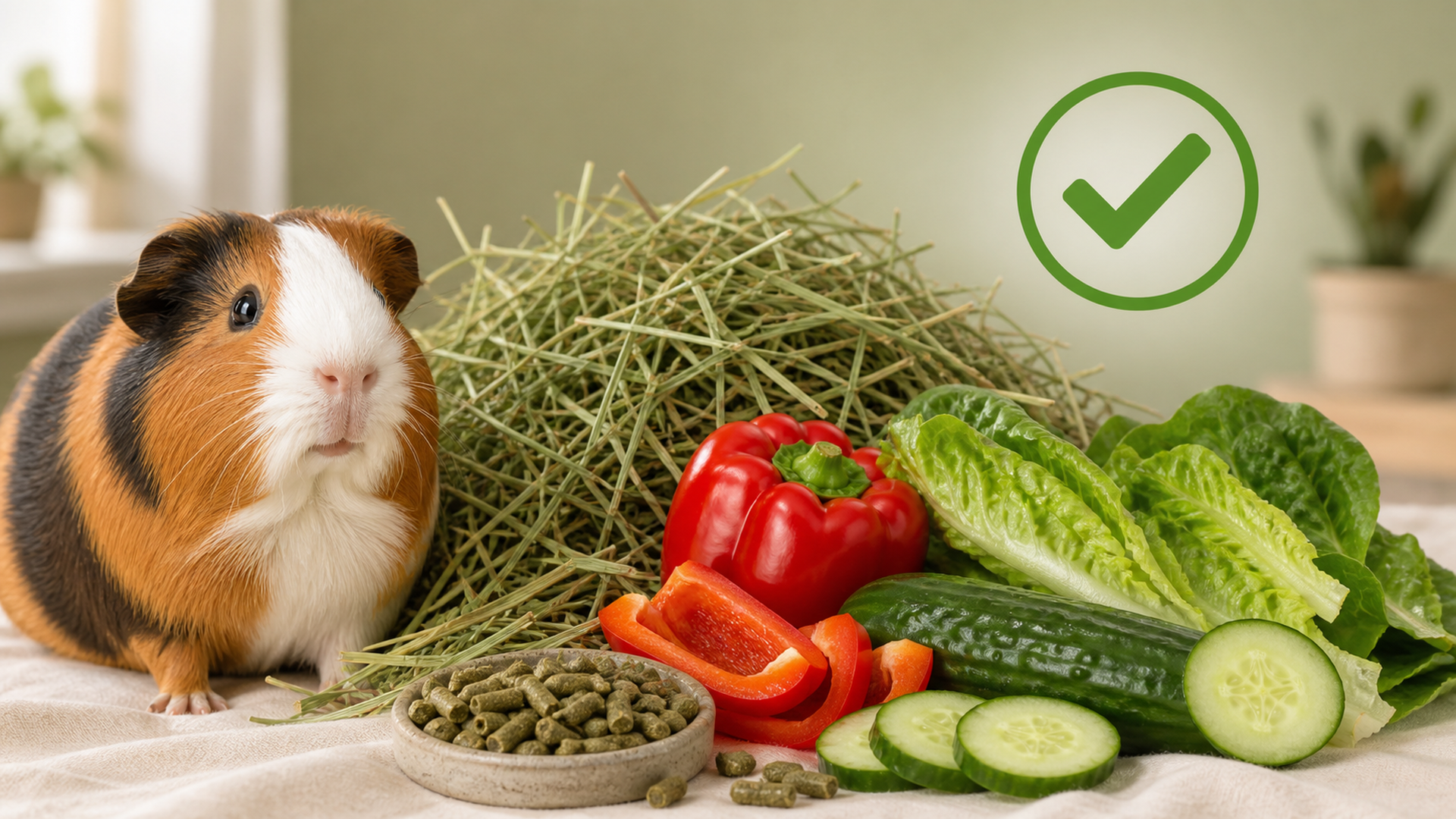
Safe Vegetables for Guinea Pig Food Bowls
Useful choices include bell pepper, romaine and other appropriate leafy greens, cucumber, coriander and small portions of several vegetables. Variety is better than a mountain of one item. Introduce unfamiliar produce gradually while watching droppings and appetite.
Guinea pigs are very good at turning ordinary care into a negotiation. They may object to a check, then accept the apology vegetable immediately afterward. Keeping sessions calm and brief protects trust while still allowing us to notice feet, skin, weight and behavior before a small concern becomes a larger one.
Guinea Pig Food: Foods Guinea Pigs Cannot Eat Safely
Do not feed onion, garlic, chives, potato or potato skin, avocado, rhubarb, mushrooms, tomato leaves or vines, chocolate, dairy or meat. Iceberg lettuce offers little value and may upset digestion. Apple seeds and unknown garden plants should also stay away.
The practical test is not whether something looks attractive in a photograph. It is whether the guinea pig can eat, move, rest, hide and live socially without discomfort. I return to that test whenever products, trends or confident internet opinions become confusing.
Guinea Pig Food Portions and Pellet Choices
Choose plain uniform guinea-pig pellets rather than colorful mixes that encourage selective feeding. Follow veterinary guidance for portion size and adjust for age and health. Fruit and carrots are sugary treats, not daily foundations.
Because guinea pigs hide pain, I never rely on one dramatic symptom. Appetite, weight, droppings, posture, breathing and normal social habits form a picture together. A change that persists or appears suddenly is worth taking seriously, even when it seems small.

Changing Guinea Pig Food Without Upsetting the Gut
Change pellets or major diet elements gradually over two to four weeks. Sudden changes can cause digestive trouble and refusal to eat. A guinea pig that stops eating or produces far fewer droppings needs urgent veterinary advice, not a wait-and-see experiment.
One lesson I learned slowly is that the useful routine is the one a household can repeat. A perfect-looking setup that is exhausting to maintain soon stops being perfect. I prefer simple systems that make daily observation easy, because noticing a small change early is often more valuable than buying another decorative accessory.
Guinea Pig Food for Special Health Conditions
Pregnancy, growth, dental disease, urinary problems and recovery may change dietary needs. Do not invent supplements from internet lists. An experienced veterinarian can tailor vitamin C, assisted feeding or calcium advice to the actual diagnosis.
Online discussions can make this subject sound more absolute than it really is. I compare advice, watch the guinea pig in front of me and ask an experienced veterinarian when health is involved. Individual age, history and medical needs can change what is sensible, so confidence should never replace curiosity.
Guinea Pig Food: Keeping Useful Daily Notes
A short notebook can turn vague impressions into useful information. I record weekly weight, appetite changes, unusual sounds or behavior, and anything altered in the enclosure or diet. This is not about watching guinea pigs anxiously every minute. It is about knowing their ordinary pattern well enough to recognize when a quiet change deserves attention. Over time, these records reveal preferences and routines that memory tends to blur, especially in a busy home with more than one guinea pig.
Photographs can help with coat, skin, cage layouts and body condition, while short videos may capture a noise or movement that disappears at the clinic. Dates matter. So does context: write down whether a new food, companion, room temperature or stressful event came before the change. A veterinarian can use clear observations far more effectively than a guess based on one dramatic internet post.
I also leave room to change my mind. Advice improves, products change and individual animals surprise us. The kindest approach is not defending an old routine because it once seemed correct; it is adjusting carefully when better evidence or the guinea pig's own response shows a safer way.
A Thoughtful Approach to Guinea Pig Food
The most reliable care is built from observation, simple routines and a willingness to ask for help. Keep notes, question dramatic claims and watch what your guinea pigs actually do. Their needs are not complicated because they are trying to be difficult; they are specific because these small animals evolved with bodies and instincts very different from ours.