
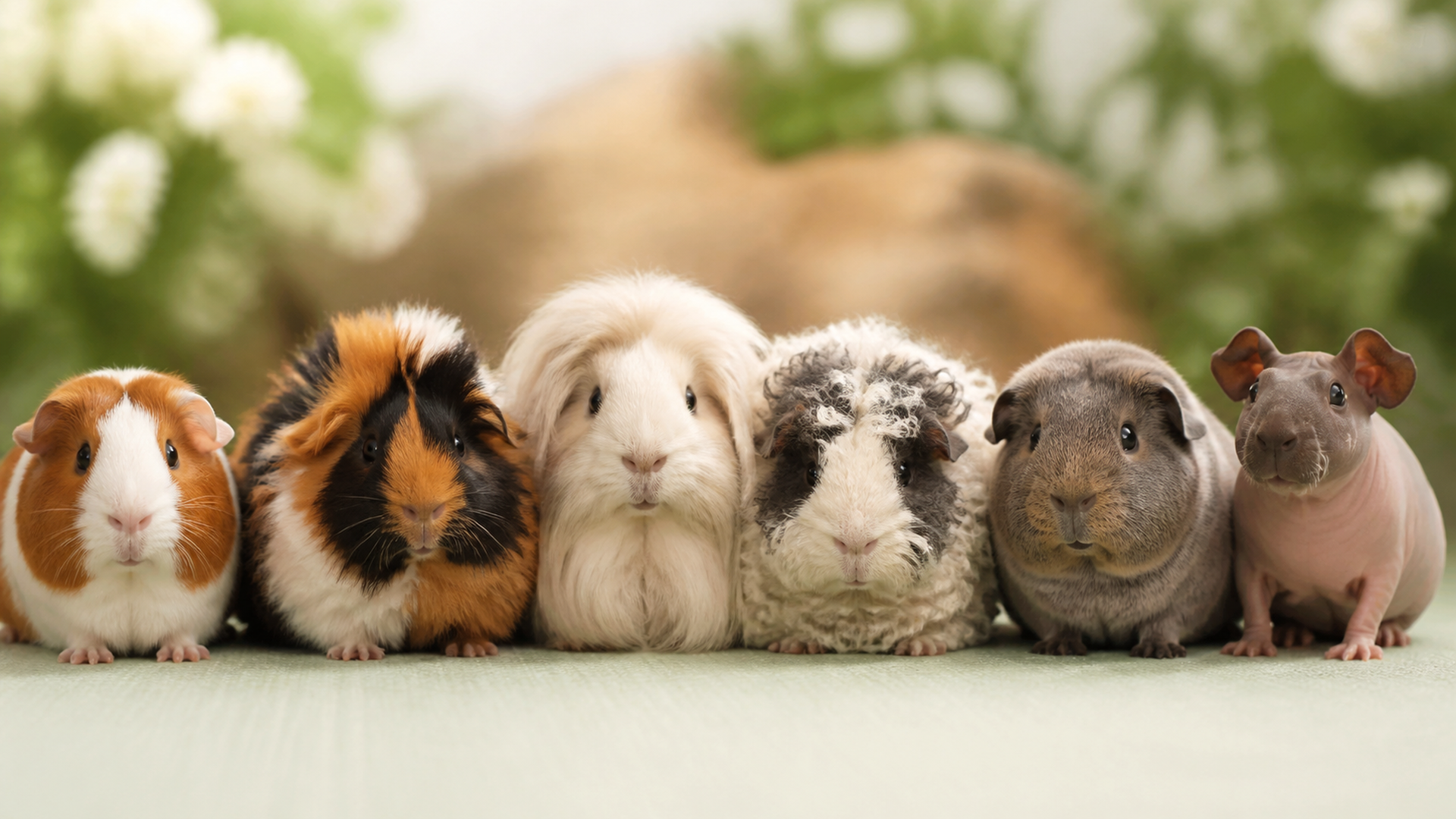
Guinea Pig Breeds
When people first discover how many guinea pig breeds exist, the usual reaction is a mixture of delight and confusion. Some guinea pigs have smooth, tidy coats, some look as though they have just walked through a strong breeze, and others carry enough hair to make a shampoo advertisement jealous. After more than ten years of caring for guinea pigs, I still find it amazing that animals with the same basic potato-shaped body can look so wonderfully different.
I am not a professional breeder or a veterinarian. What I know has come from living with guinea pigs, reading, asking questions, comparing experiences with other owners, and occasionally learning things the messy way. Breed guides are useful, but they should never make us forget that every guinea pig is an individual. A breed may suggest a coat type and certain care needs; it cannot promise whether your new friend will be bold, shy, cuddly, noisy, or convinced that dinner is forty minutes late.
What Makes One Guinea Pig Breed Different From Another?
Most recognized guinea pig breeds are distinguished mainly by their coat. Length, texture, direction of growth, rosettes, curls, and the presence or absence of hair all matter. Color and markings create even more variety, although the same colors can appear in several breeds. Size and body shape may vary a little, but the dramatic difference is usually what is happening in the fur department.
Breed can affect daily care. A smooth coat may need only an occasional gentle brush, while a long coat can collect hay, bedding, and mysterious little objects that seem to appear from nowhere. Hairless guinea pigs need special attention to warmth and skin protection. Curly or dense coats should be checked carefully because tangles and skin problems are not always obvious from the surface.

American Guinea Pigs: The Classic Smooth-Coated Friend
The American guinea pig is often the picture people have in mind when they hear the words “guinea pig.” Its coat is short, smooth, and close to the body. This makes grooming pleasantly simple and allows you to spot changes in the skin or body condition fairly easily. For a first-time owner who feels nervous about coat maintenance, an American can be a very sensible choice.
That does not mean Americans are basic or boring. Their colors and markings can be beautiful, and their personalities cover the entire guinea pig spectrum. I have met smooth-coated pigs who behaved like tiny explorers and others who treated every new cardboard box as a possible dragon. The easy coat is predictable; the personality inside it certainly is not.
Abyssinian Guinea Pigs and Their Permanent Bed Hair
Abyssinians have short hair arranged in rosettes, creating ridges and tufts across the body. A well-rosetted Abyssinian looks charmingly untidy even when perfectly groomed. If an American guinea pig appears ready for a family photograph, an Abyssinian often looks as though the photograph interrupted an important adventure.
Their coat does not usually demand the work of a long-haired breed, but it deserves regular checks. Part the rosettes gently and look at the skin underneath, especially if your guinea pig is scratching or seems uncomfortable. People sometimes describe Abyssinians as lively or cheeky. I have certainly known some confident ones, but I would treat that as an entertaining tendency rather than a rule written in stone.
Peruvian and Silkie Guinea Pigs: Living Hair With a Guinea Pig Underneath
Peruvian guinea pigs have long, flowing hair that can grow forward over the head as well as down the body. Silkies, also called Shelties in some places, have long hair that sweeps backward from the face. Both can look magnificent, but that beauty comes with a real grooming commitment. Their coats need frequent checking, gentle brushing, and practical trimming if they are kept as pets rather than prepared for shows.
I love the look of a long-haired guinea pig, but I also believe comfort matters more than maintaining a dramatic floor-length coat. A shorter practical trim around the rear and sides can make life cleaner for everyone involved. Long hair can become wet, tangled, or packed with bedding. The guinea pig will not admire its glamorous reflection and thank you for preserving every centimetre; it will probably thank you more for preventing a knot from pulling at its skin.

Texel Guinea Pigs: Curls With Extra Responsibility
Texels combine a long coat with curls or ringlets, giving them an unforgettable woolly appearance. They are extremely photogenic, but curly hair can hide tangles and trap debris. Owners need patience and a gentle hand. Pulling a brush through a knot is painful, so difficult tangles should be handled carefully and, when necessary, trimmed rather than forced.
A Texel can look as if it has spent the morning at an expensive salon, even when it has actually spent the morning sitting in hay. That is part of the charm. It is also part of the maintenance. Anyone considering one should be honest about whether regular grooming will still feel manageable after the initial excitement has passed.
Teddy and Rex Guinea Pigs: Plush, Dense and Very Touchable
Teddy guinea pigs have a short, dense coat that stands up from the body, creating a soft, plush-toy appearance. Rex guinea pigs also have an upright coat, often with a coarser or springier texture. Depending on where you live and which breed standards are used, you may see the names and descriptions explained slightly differently.
These coats are short, but short does not mean they should be ignored. Dense fur can make skin changes harder to notice, so use your fingertips as well as your eyes during health checks. Gently feel for lumps, sore spots, flakes, or anything unusual. Do not be surprised if a Teddy looks offended that the examination interrupted a snack. Guinea pigs are talented at making reasonable care feel like a personal betrayal.
Hairless Guinea Pigs: Skinny Pigs and Baldwins
Hairless guinea pigs are impossible to forget. Skinny pigs usually have very little hair apart from small amounts around the nose and feet, while Baldwins lose their hair as they grow. Their lack of a protective coat means they are sensitive to cold, drafts, rough surfaces, and direct sun. They need a reliably warm environment, soft bedding, and regular skin checks.
People sometimes assume hairless guinea pigs are easier because there is no coat to brush. In reality, their needs are simply different. They may use more energy staying warm and can have healthy appetites to match. Their skin should not automatically be covered in creams or oils; unnecessary products may irritate it. If the skin looks dry, sore, or unusual, advice from a guinea-pig-experienced veterinarian is safer than experimenting with products intended for people.
Other Breeds You May Meet
Depending on your country, you may also encounter breeds such as the Coronet, which has a long coat and a crest on the head; the Crested, a smooth-coated guinea pig with a single forehead rosette; the Merino, with curls and a crest; and the Lunkarya, known for a long, rough, curly coat. Breed names and official recognition vary between organizations and regions, so two experienced owners may use slightly different terminology without either one trying to start a guinea pig identity crisis.
Pet guinea pigs are also very often mixed breeds. A mixed guinea pig may show hints of several coat types: a suspicious tuft on the forehead, longer hair around the rear, or one determined rosette that refuses to lie flat. Mixed breeds are every bit as lovable as pedigree animals. Unless you plan to show guinea pigs, knowing the precise family tree is much less important than understanding the coat in front of you and caring for it properly.
Does Breed Decide Personality?
This is one of the questions people ask most, and my honest answer is: not reliably. You will hear that one breed is calm, another is bold, and another is especially affectionate. There may be broad tendencies reported by owners, but personality is shaped by the individual animal, early experiences, health, environment, and the patience of the people around it.
I would never choose a guinea pig only because a breed description promises cuddles. Some guinea pigs relax quickly with handling, while others need weeks or months to build trust. A shy guinea pig is not unfriendly; it may simply be careful. There is something very rewarding about the first time a cautious guinea pig takes food from your hand or decides that your presence no longer requires an emergency dash into the nearest tunnel.

Choosing the Right Guinea Pig Breed for Your Home
Start with care, not appearance. Ask how much time you can give to grooming, whether your home stays warm enough for a hairless guinea pig, and whether you can confidently check a dense or curly coat. If you love the flowing look of a Peruvian but know daily grooming will become a chore, a smooth-coated guinea pig may be a happier match for both of you.
More importantly, think about companionship and housing. Guinea pigs are social animals and generally do best with a compatible guinea pig friend. A suitable bond matters more than matching breeds. A smooth American and a rosetted Abyssinian do not care that their hairstyles belong in different categories. They care about space, safety, food, hiding places, and whether the other guinea pig respects the ownership rules for the favorite tunnel.
Meet guinea pigs through a reputable rescue if possible. Rescue staff often know the animals’ temperaments, established bonds, and health needs. Adopting an already bonded pair can remove much of the guesswork. Whatever the source, avoid choosing on looks alone and never rush into breeding. Pregnancy and birth carry serious risks, and responsible breeding requires knowledge far beyond placing two attractive guinea pigs together.
Every Breed Needs the Same Good Foundations
Different coats create different routines, but the foundations of care remain the same: unlimited appropriate grass hay, fresh water, suitable guinea pig pellets, vitamin-C-rich vegetables, a spacious clean enclosure, safe places to hide, companionship, exercise, and prompt veterinary attention when something changes. Regular weighing is one of the most useful habits I have learned because weight loss can appear before illness becomes obvious.
In the end, the best guinea pig breed is not the rarest, fluffiest, or most fashionable one. It is the guinea pig whose needs you can meet consistently and whose individual character you are willing to understand. Whether your companion is sleek, rosetted, curly, flowing, plush, hairless, or a little bit of everything, the relationship grows in the same way: through patience, observation, good care, and a remarkable amount of hay.